By Stevi Gable Carr, Founder & CEO, WISe Wellness Guild | Co-Founder, WellNXT
After two decades building brands inside Fortune 500 organizations, advising healthcare leaders, coaching executives, and creating wellness experiences in communities across the country, I’ve noticed something concerning:
People are investing more in wellness than ever before—and trusting it less.
We have more information. More apps. More supplements. More influencers. More wearables. More optimization tools.
Yet many people feel:
More overwhelmed.
More fatigued.
More skeptical.
More uncertain about what actually works.
The next crisis in wellness isn’t access.
It isn’t innovation.
It isn’t personalization.
It’s trust.
And rebuilding trust may become the most important work the wellness industry does over the next decade.
Because without trust, people don’t change behavior. Without trust, communities disengage. Without trust, wellness becomes another transaction instead of transformation.
The Wellness Economy Is Growing. Trust Is Not.
The global wellness economy reached $6.8 trillion, with projections approaching $9–10 trillion within several years. Consumers are prioritizing longevity, mental wellbeing, prevention, recovery, and whole-person health at unprecedented rates. Global Wellness Institute reports wellness is growing faster than global GDP in many sectors.
Yet growth does not automatically create confidence. Recent consumer research from McKinsey & Company shows people increasingly seek wellness solutions while simultaneously demanding more evidence, transparency, and personalization. Consumers want prevention—but they also want proof.
That tension matters. Because somewhere between wellness becoming mainstream and wellness becoming commoditized, many people stopped knowing who to believe.
What Is Trust in Wellness?
Trust in wellness is not believing a product works.
Trust is believing: Someone has your wellbeing—not just your wallet—in mind.
Trust is confidence that guidance is:
Evidence-informed
Transparent
Consistent over time
Safe to explore
Rooted in genuine expertise
Appropriate for your lifestyle, culture, and identity
Trust asks: “Do I feel safe enough to try this?”
Before asking: “Will this work?”
That distinction is important.
Behavior change research repeatedly shows people adopt new habits more readily when psychological safety exists—when experimentation feels low-risk and supported.
I often tell leaders the same thing in executive coaching: Humans do not sustainably change where they do not feel safe.
That applies to organizations. It applies to teams. And increasingly it applies to wellness.
Why Did We Lose Trust?
I believe we lost trust in wellness for five reasons.
1. Wellness Became Louder Than Evidence
Social media democratized access to wellness information. That brought incredible opportunity. It also created noise.
Consumers are exposed daily to:
Contradictory nutrition advice
“Experts” with unclear credentials
Quick-fix transformation promises
Supplement stacks
Extreme optimization trends
The result? Information abundance and confidence scarcity.
2. Institutions Lost Credibility
For many people—especially women, caregivers, and historically underserved populations—traditional healthcare has not always felt accessible, personalized, or validating.
When systems fail to create belonging, people search elsewhere.
Sometimes they find healing communities. Sometimes misinformation. The trust gap widened.
3. Wellness Became Performance
Somewhere along the way, wellness shifted from:
Feeling well to Performing wellness
Tracking more.
Buying more.
Optimizing more.
Doing more.
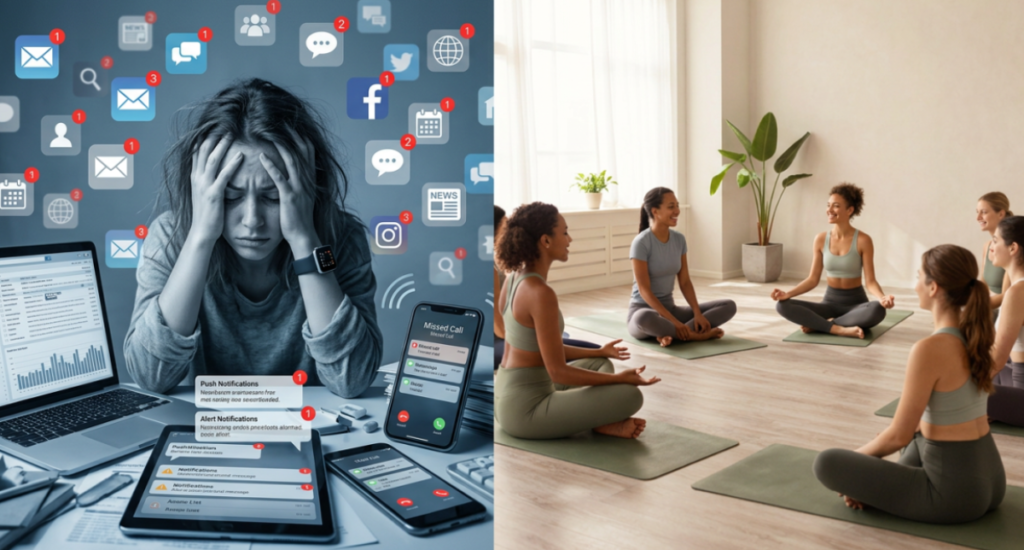
Consumers increasingly experience what I call vitality debt: The cumulative exhaustion created by trying to sustain performance without true restoration.
Wellness should reduce burden. Not become another one.
4. Communities Fragmented
Historically, wellness happened in communities like faith groups, neighborhoods, gyms, movement, and intergenerational knowledge. Now many wellness decisions happen during late-night searches, algorithms, influencers, products. Isolation rarely builds confidence. People do.
5. We Forgoct Wellness Is Cultural
What supports wellbeing in Miami may not support wellbeing in Cincinnati. What works for a founder may fail for a nurse. What resonates with Gen Z differs from active adults over 50. Wellness cannot be copy-paste.
Context matters. Culture matters. Community matters.
Rebuilding Trust: A Framework for the Future of Wellness
I believe rebuilding trust requires five things:
1. Consistency Over Time
Trust compounds. People trust what repeatedly shows up. Not once. Repeatedly.
The strongest wellness brands and communities prioritize:
Long-term relationships
Follow-through
Transparency
Measurable outcomes
Consistency is credibility.
2. Safe Spaces to Experiment
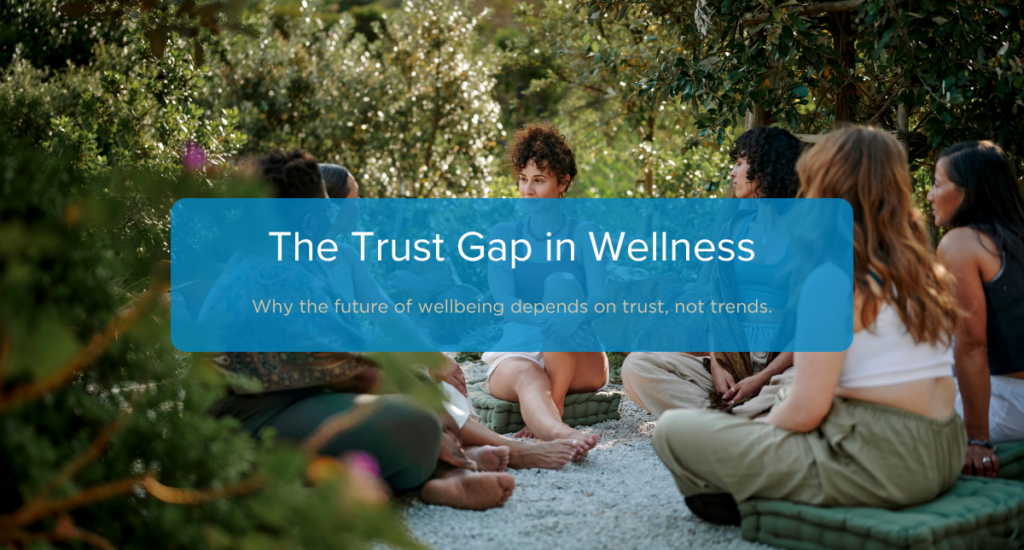
People need low-risk ways to explore wellness. Not pressure. Practice.
Imagine experiencing:
Breathwork before committing
Strength training without intimidation
Recovery modalities without stigma
Nutrition education without shame
Trust grows when wellness feels approachable. Try → Reflect → Connect → Sustain
3. Communities & Ambassadors
People trust people before institutions. Research increasingly shows younger generations place significant weight on peer recommendations and communities. These include run clubs, local creators, healthcare professionals, parents, neighbors.
Trusted ambassadors reduce uncertainty. Community becomes infrastructure.
4. Evidence + Lived Experience
Data matters. Stories matter. The future belongs to organizations capable of translating evidence into everyday life. Not simply saying: “Research supports this.” But asking: “What does this look like for your reality?”
5. Curated Wellness, Not Unlimited Wellness
Consumers do not need infinite options. They need trusted curation.
The next generation of wellness winners will help people answer: What is worth my attention? And perhaps more importantly: What is not?
Why This Matters for Cities and Why WellNXT Exists
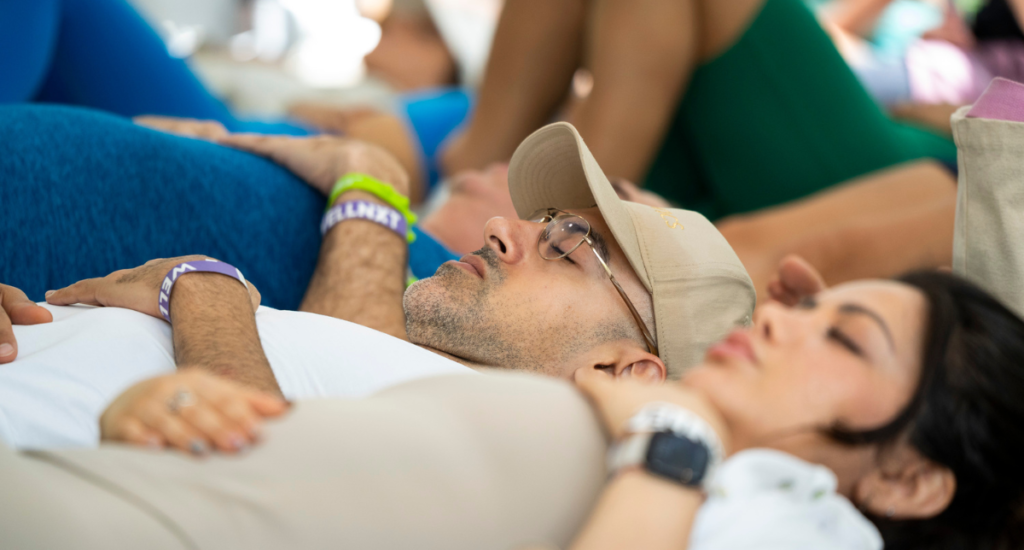
This belief is foundational to why we built WellNXT. Not as another event. Not as another wellness marketplace. Not as another sponsorship platform. But as a trusted ecosystem designed to make wellness operational—not aspirational.
Because wellness is deeply local. A city has culture. Identity. Stressors. Strengths. Needs. The future of wellness is not one-size-fits-all.
It is:
Hyper-localized.
Community-driven.
Evidence-informed.
Experience-based.
At WellNXT, our question has never simply been: What’s trending in wellness?
It has been: What’s right for this community?
How do we close the trust gap between:
Consumers → credible guidance
Innovation → adoption
Information → action
Wellness → sustainable behavior change
That means elevating trusted voices. Curating partners. Creating low-risk environments for trial. Connecting healthcare, employers, brands, and communities. Building relationships before transactions. Because people rarely change from hearing. They change from experiencing.
My Belief About the Future of Wellness
I believe the organizations that lead the next decade will not necessarily have: The biggest budgets. The most influencers. The loudest platforms. They will earn trust. Patiently. Consistently. Collectively.
The future of wellness may belong less to optimization and more to belonging. Less to scale and more to safety. Less to trends and more to trust. And perhaps that is the real question for all of us building in wellness: How do we become worthy of people’s trust again?
Because closing the trust gap isn’t simply good for business. It may be one of the most important public health opportunities of our generation.
If you’re a brand, city, or organization who wants to build trust, WellNXT can help. Contact us here.